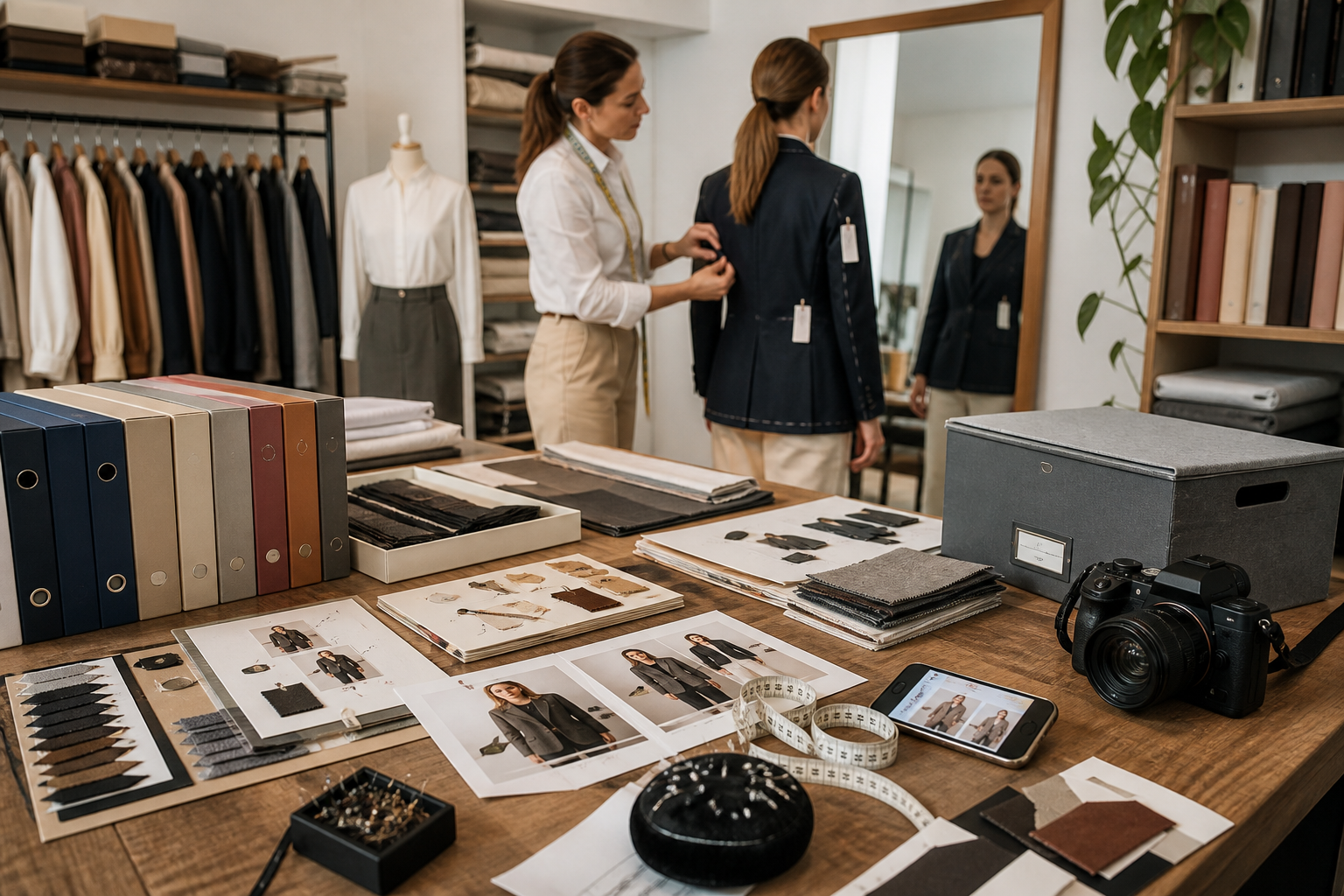

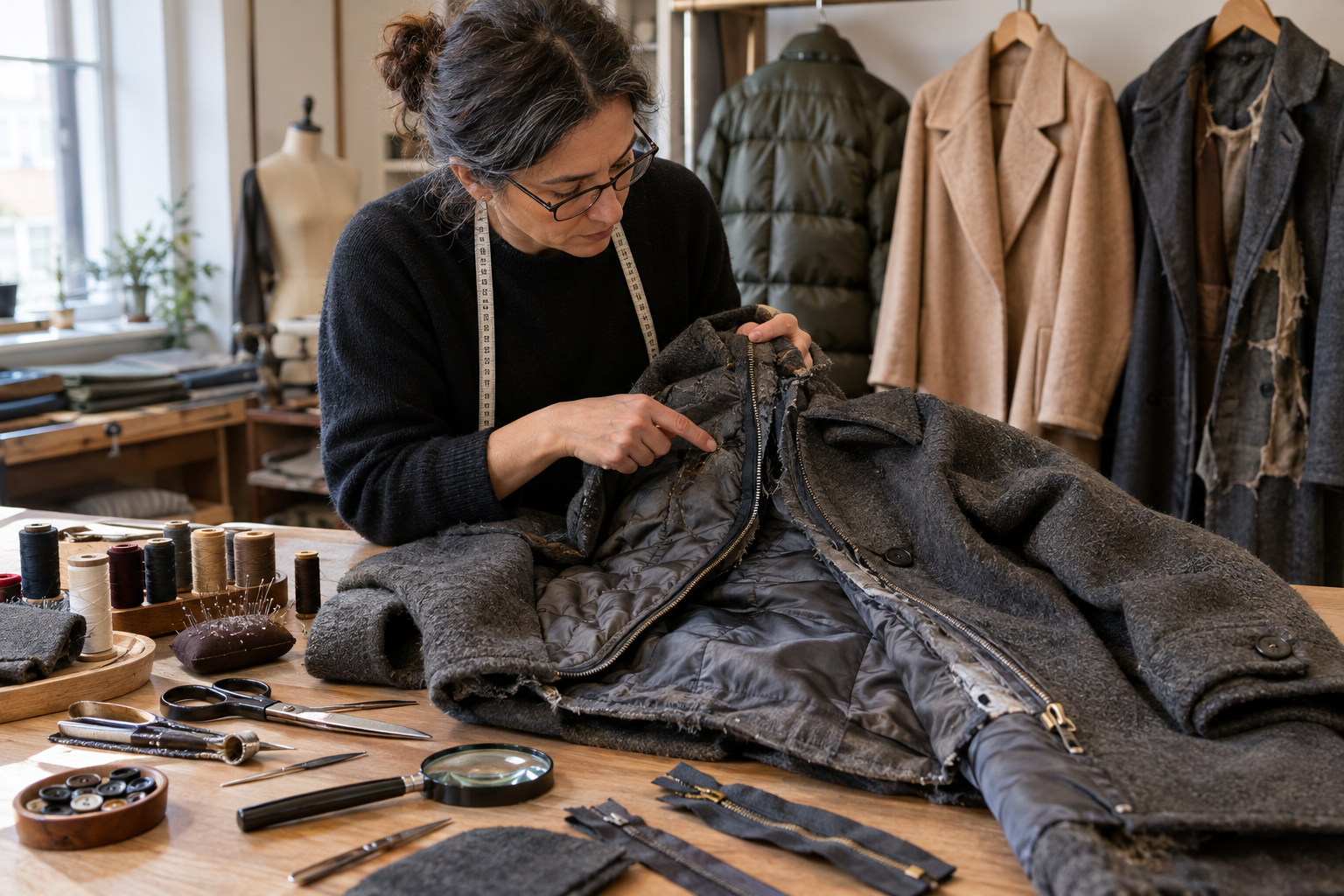
Before deciding to take a coat to a repair shop, it is worth understanding what types of repairs are common and what technical limitations might make the repair more expensive or prevent it from being carried out. This section explains in detail what repair shops can repair and how the fabric and construction affect the outcome and the cost.
What garages repair and how fabric and construction affect this
Common types of repair
- Zips: Complete replacement if the rail or slider is damaged; minor repairs (repositioning the slider, replacing the stop) if the damage is minor.
- Lining: local repairs, repositioning following poor stitching or a displaced lining, and partial or complete replacement when the item is badly worn or torn.
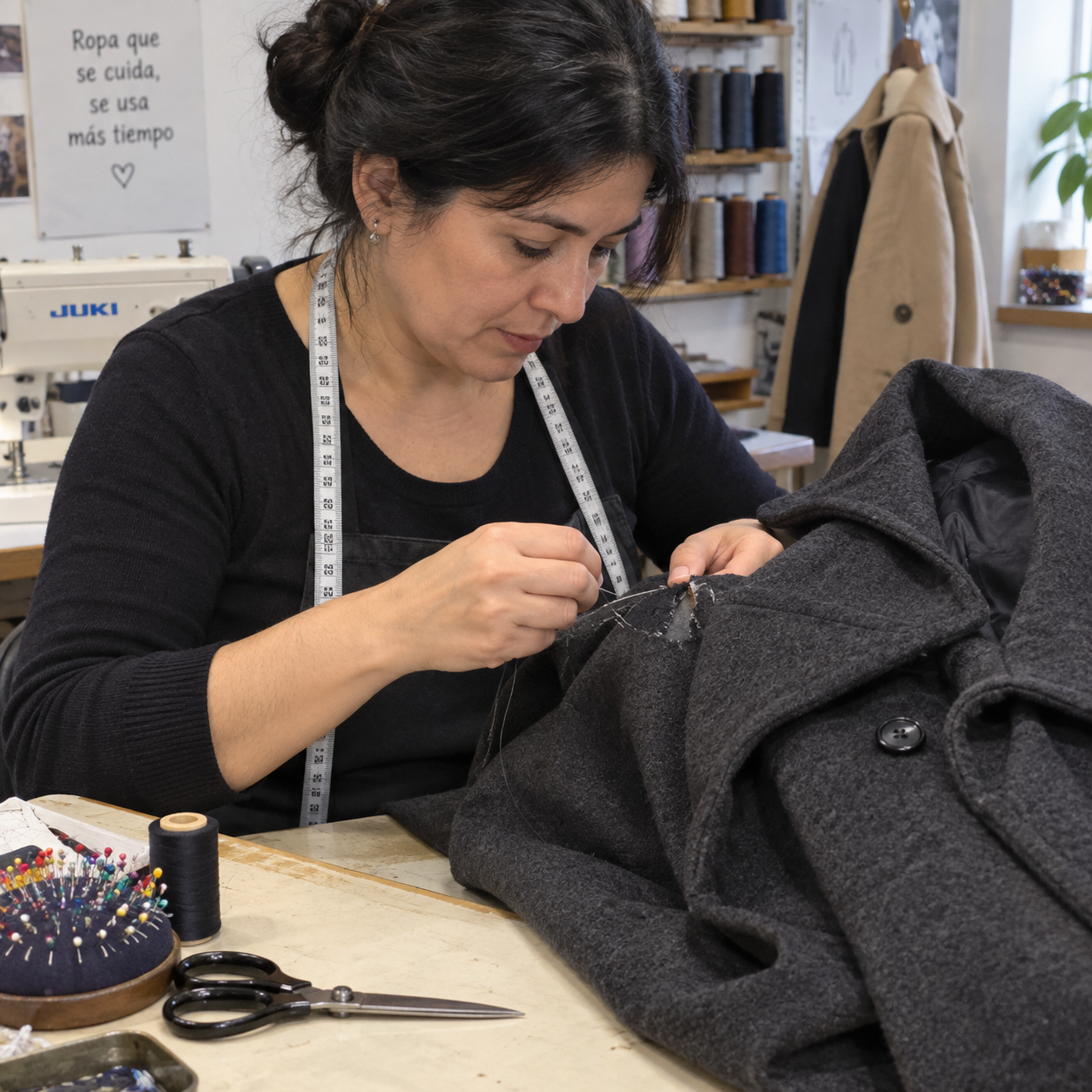
- Stitching and reinforcements: sewing up open seams, reinforcing shoulders and lapels, repairing structural seams.
- Size adjustments: take in, unpick seams, shorten sleeves or lengthen hems depending on the available seam allowance.
- Buttons, eyelets and fastenings: replacement and reinforcement; with antique garments, it may be necessary to find compatible pieces or adapt modern ones.
Technical limitations depending on the fabric
- Cloth and wool: They allow for most alterations (fitting zips, repositioning linings). On thick fabrics, the patches are usually visible; the stitching may affect the drape if a pattern is not used.
- Down and synthetic-filled quilts: They present difficulties in maintaining thermal seals and watertightness. Replacing the filling or restoring the chambers requires expert handling; the result may not restore the original watertightness.
- Delicate fabrics (cashmere, silk): risk of needle marks, visible seams and changes in texture. It is often necessary to replace the lining with a compatible one and to use fine stitches to prevent damage.
Construction factors that make repairs more expensive or easier
- Hand-sewn lining: Taking it apart and sewing it back together increases the amount of labour and time required.
- Padded liners and welded chambers: They require specific techniques and materials; they would increase the cost compared with a simple lining.
- Sealed or heat-fused seams: difficult to replicate without specialised equipment; repairs are often only partial and less durable.
- Special wadding or fillings: If they are made of an unusual material, this may increase the price due to the need to source them or to substitute them with an alternative material.
When should you replace parts or get rid of your coat?
Before giving the go-ahead for any work, ask for a detailed quote and consider three key factors: cost, functionality and aesthetics. Practical decisions are based on the extent to which the restoration restores the item’s original use, weighed against the expense and time involved.
Economic criteria
- A quick rule of thumb: if the cost of the repair is approximately 40–50 per cent of the price of a new coat of equivalent quality, it is worth considering buying a replacement. Adjust this threshold according to the garment’s sentimental value or rarity.
- Costly repairs: replacing the entire lining in quilted coats, completely replacing the down filling, or reconstructing the structure of fine fabrics tend to drive up the cost significantly.
- Minor repairs (standard zips, buttons, hems) are usually good value for money; always ask for a breakdown of the cost of materials and labour.
Functionality and safety criteria
- If the coat is no longer waterproof or insulated (e.g. lost down clusters, damaged heat-sealed seams), repairing it may not restore its original protection.
- Major structural damage — extensive tears in the fabric, key seams coming apart, lining disintegrating — can compromise the garment’s structural integrity and require complete reconstruction.
- In larger garments with degraded fibres (loss of strength in wool or aged synthetics), spot repairs are usually only a temporary solution: assess the expected lifespan.
Aesthetic and feasibility criteria
- Visibility of the repair: on thick or patterned fabrics, patches may be noticeable and affect the drape. If appearance is a priority, consider options such as a new lining or a decorative patch.
- Availability of components: special zips, vintage linings or original buttons may not be available; whilst it is possible to use modern alternatives, this alters the character of the garment.
- Seam allowance: some alterations (lengthening sleeves, taking in the waist significantly) depend on the available seam allowance; ask to see the inside before giving your approval.
Clear signs to rule out
- Extensive mould or odours that do not go away after professional cleaning.
- Fibres coming loose or fabric fraying over large areas (elbows, back).
- Extensive damage affecting both the structure and the cladding; when almost everything requires repair, replacement is usually the more sensible option.
In practice, ask for two quotes: a minimum one to make the garment wearable again, and an optimal one to restore both its function and appearance. Compare this with the cost and time involved in buying an equivalent coat before making a decision.
What to check and prepare before taking your coat to the repair shop
Before handing over the garment, a quick check and some basic documentation will save time and prevent any unexpected costs. Take all the information to the workshop that will enable an accurate assessment: areas of damage, the garment’s history and intended use.
Pre-purchase inspection: what to look for and test
- Condition of the zip: test the entire length, check for loose teeth, misalignment and whether the slider comes off or jumps.
- Lining: check for breaks, tears along the seams, hand-sewn areas and areas where the fabric is coming away in places subject to the most friction (underarms, elbows, hem).
- Filling or insulation: feel for any displacement of wadding or empty pockets in quilts and duvets; check for stains or dampness that may indicate a loss of insulation.
- Seams and structure: check for open seams, loose threads, wear and tear on the shoulders and elbow patches, and areas where the drape of the fabric has become distorted.
- Fabric and finish: check for areas of wear, large tears, severe pilling or damaged fibres; note whether there are any delicate fabrics such as cashmere or silk.
Questions you will be asked (and which you should answer) during the workshop
- Would you like to retain the original finish, or would you prefer a more economical, practical solution?
- How do you intend to use it after it has been repaired (day-to-day use, extreme cold, formal occasions)?
- Do you accept substitutions with modern materials if the original is unavailable?
- Deadlines: when you need the garment back and whether there is any flexibility regarding the deadline.
Useful documentation for the budget
- Photos: Take clear close-up photos of the front, back, labels (composition) and any damage.
- Measurements and requirements: please note down any desired changes to the size or specific alterations (tailoring, sleeve length).
- History: please state whether the garment has undergone any previous repairs or has any added parts.
Deadlines, guarantees and cost breakdown
- Ask for a quote broken down into labour and materials; check whether the part to be replaced (zip, lining, filling) is a branded or generic item.
- Please check the estimated turnaround time and the retouching policy in case the result requires further adjustments.
- Ask whether the tailor’s offers a guarantee on stitching and zip fitting; make a note of the duration and conditions.
Use SastrePro to save photos of the damage, record the repair shop’s diagnosis and set a collection date; this will give you a clear record against which to compare quotes and check what has been agreed.